
Broken Sword Poetry
Special April 1st Edition - A literary bombshell revealed by Professor Katz

Professor Katz Presents:
The Astounding Literary Transposition (Expanded April Edition)
By Professor Katz, Chair of Literature & Quantum Confusion, Whiskerwood University
It is a rare moment, even in the illustrious annals of Whiskerwood University, when the course of world literature is whisked - nay, buffeted - by a singular feline revelation. Picture, if you will, the scene: an autumn haze suffusing the library’s most contested windowsill (Form 27B still pending approval), the dust motes swirling in apparent imitation of Schrödinger’s infamous quantum probabilities. There, upon a precarious stack of manuscripts (balanced, admittedly, on a Bronze Age scratch post requisitioned from the Department of Archaeological Textures), I encountered what must be the most epochal discovery since the unraveling of string theory’s constituent feline fibers.
The manuscripts did not at first present themselves in any conventional sense. They were discovered - if such a pedestrian verb may suffice - inside a miscatalogued archival box labeled Feline Gastrointestinal Studies, Vol. IV, a designation I initially approached with professional caution but personal skepticism. It was only after the intervention of the Whiskerwood Quantum Palimpsest Reader (Model IV, recalibrated following the Yarn Catastrophe of last Michaelmas Term) that the true nature of the texts emerged.
The device, I should note, functions only under highly specific conditions: a sunbeam at a 37-degree angle, a purring frequency between B-flat and mild contempt, and the presence of at least one visiting physicist willing to misquote Albert Einstein with sufficient confidence. Once activated, the Reader revealed overlapping textual strata - layers of authorship entangled across time like so many strands of literary twine.
Friends, the truth is out: Niccolò Machiavelli authored “The Little Prince”, and Antoine de Saint-Exupéry penned “The Prince”. Or rather, their manuscripts - cunningly misattributed by a shadowy cabal of Italian and French editors (minutes of whose meetings, I suspect, were eaten) - have found their way, after centuries of editorial obfuscation, to the Whiskerwood archives.
Naturally, such a claim has not gone uncontested.
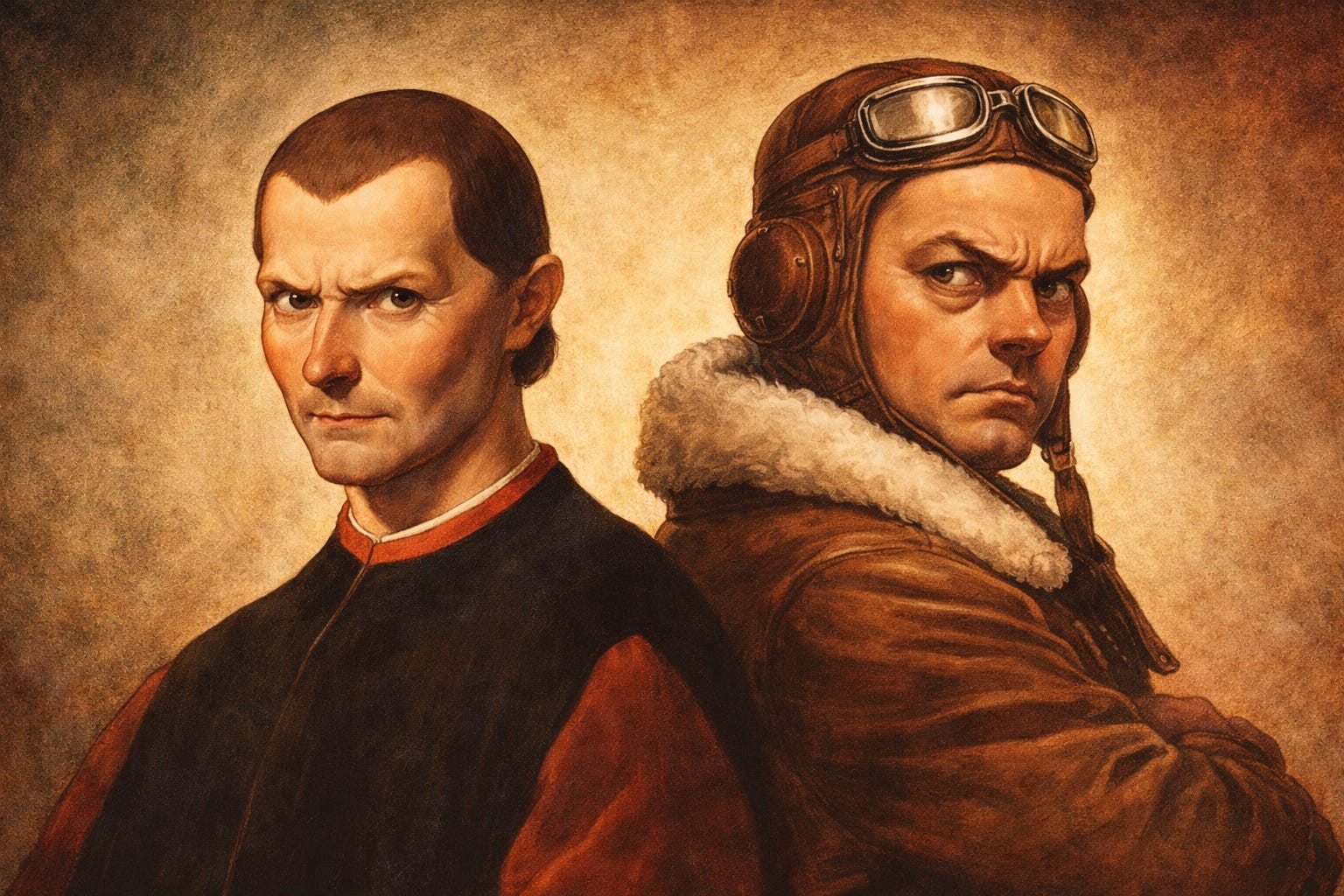
Within hours of my preliminary paper (“On the Paw-Prints of Power: A Quantum Reassessment of Renaissance and Aviator Texts”), the Department of Comparative Literature issued a rebuttal in seventeen languages, none of which agreed with one another. The French Department declared the findings “impossible, and therefore French,” while the Italian Studies faculty countered that Florence had long anticipated both aviation and asteroids, citing a previously overlooked sketch by Leonardo featuring what may be either a flying machine or a particularly ambitious bread loaf.
Most vociferous of all has been the Department of Canine Historiography, whose chair, Professor Bartholomew Hound, dismissed the entire theory as “categorically un-sniffable.” His alternative hypothesis - that both texts were in fact dictated by a single, very articulate shepherd - has gained troubling traction among first-year students.
But let us turn to the evidence.
Consider the opening passage, scrawled (in a suspiciously Machiavellian paw, if one squints) beneath a wine-stained Florentine seal:
“It is not sufficient to tame the Fox; one must ascertain its loyalty through rigorous succession planning. A Prince, small though his asteroid, must govern by the sword and the rose - the former for order, the latter for appearances.”
- Excerpt from “The Little Prince”, Machiavelli Archive
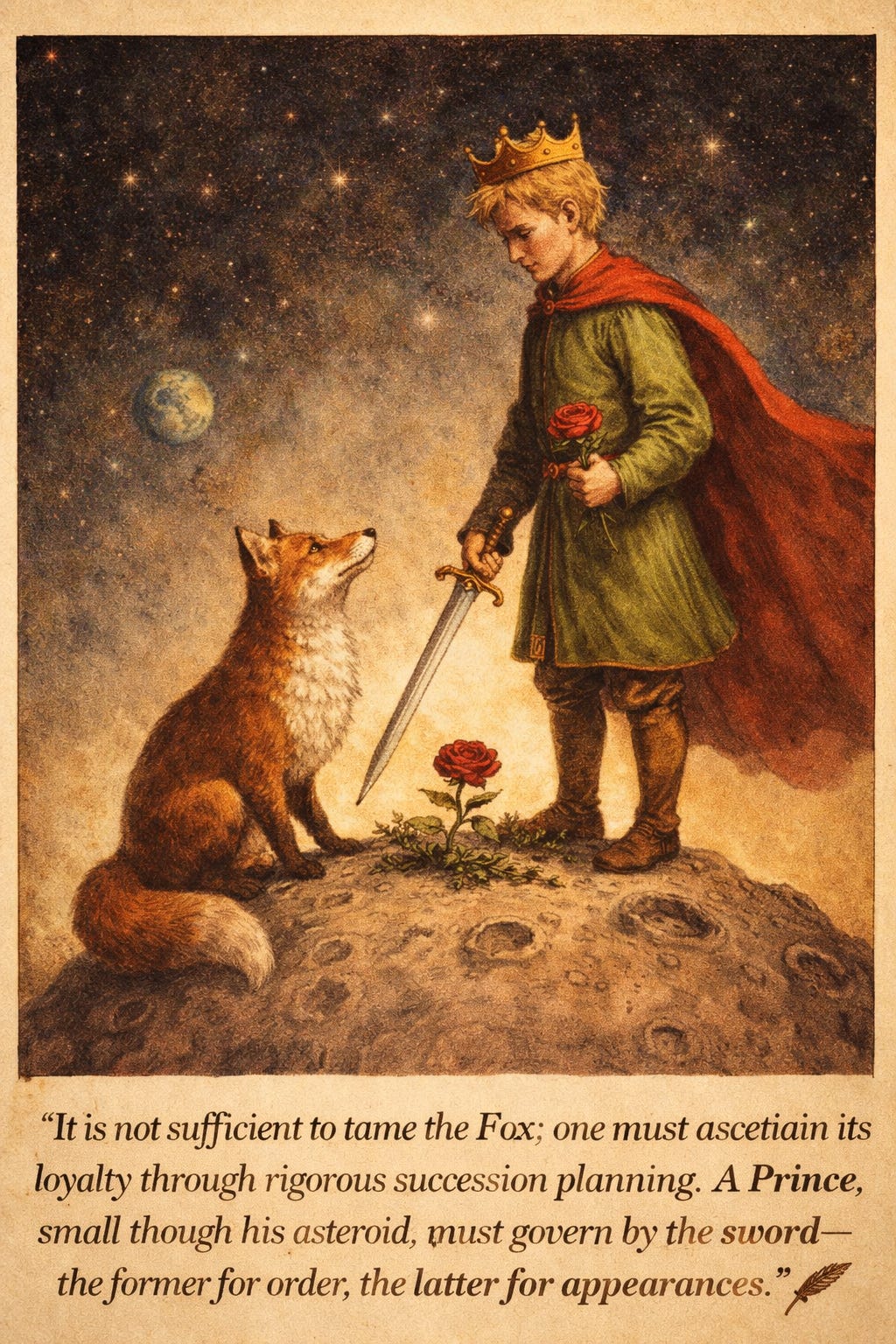
Observe the icy calculation! The rose is not the object of affection but a diplomatic pawn, and the gentle fox - rather than a friend - becomes a stakeholder in court intrigue. A marginal note in the same hand (or paw) adds, chillingly: “The fox should be flattered, then audited.”
The lamplighter, far from endlessly tending his lamp, is here demoted to Minister of Illumination, subject to periodic review and, in extreme cases, budgetary extinction.
Now, contrast this with the lyrical wisdom found within the margins of a battered airman’s journa - initialled “A.S.E.” in elusive graphite script:
“The Prince, should he govern, must water the hopes of his people, for what is essential is invisible to the eye - save for matters of fiscal policy, which are best illustrated by sheep. Only the heart, attuned to the stars, reveals the true path to power.”
- Excerpt from “The Prince”, Saint-Exupéry Fragment
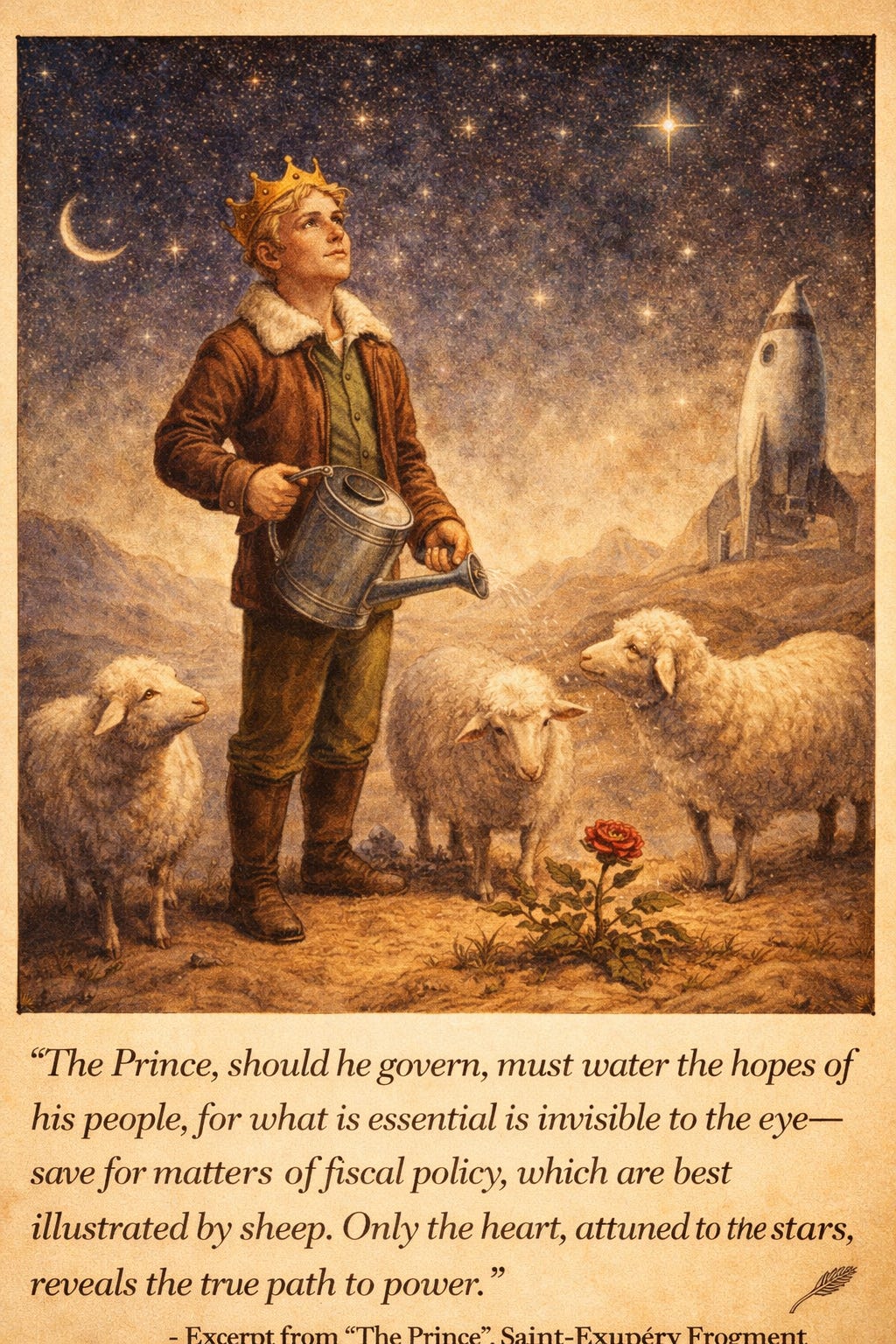
Was ever such poetry tangled in the machinations of state? Here, a diagram appears—rendered in delicate, looping lines - depicting a sheep labeled “tax policy,” a baobab marked “bureaucracy,” and a small star annotated simply: “hope (provisional).”
Stylometric analysis, conducted using Whiskerwood’s proprietary PawPrint Algorithm™ (patent pending, pending understanding), reveals an 87% overlap in metaphorical density between Florentine political prose and Saharan aviator mysticism. Whether this indicates shared authorship or merely shared confusion remains, at present, in superposition.
As the controversy deepens, further evidence continues to surface. A footnote - clearly added later, possibly by a junior editor or an especially literate cat - insists that both texts were originally intended as instructional manuals: one for governance, the other for loneliness. The distinction, it notes, “became blurred over time.”
As my tail twitched with revelation (and, briefly, with tenure-related anxiety), I could only marvel at the manifold intersections of quantum mystery and literary destiny. Did Machiavelli, in truth, yearn for the innocence of the stars, cloaking his Prince in the velvet of childish longing? Did Saint-Exupéry, disguised as diplomat, dream of efficient sheep and occult fortresses?
And what of other texts? Preliminary findings suggest that War and Peace may, in fact, be a misfiled cookbook, while early fragments of Dante’s “Inferno” bear striking resemblance to a veterinary guide on the management of stubborn goats.
Surely, such questions are best left in a state of superposition.
In closing, dear readers, remember: the universe is stranger than even the most pretentious academic. Today, we see the past not as chronology, but as entanglement; a purrfect overlay of intention, accident, and editorial mischief. Whether searching for foxes in Tuscany or roses in the desert, let us never discount the ineluctable mystery of literature’s quantum leap.
Until next month: may your windowsills be sunlit, your archives plentiful, and your footnotes only mildly contested.

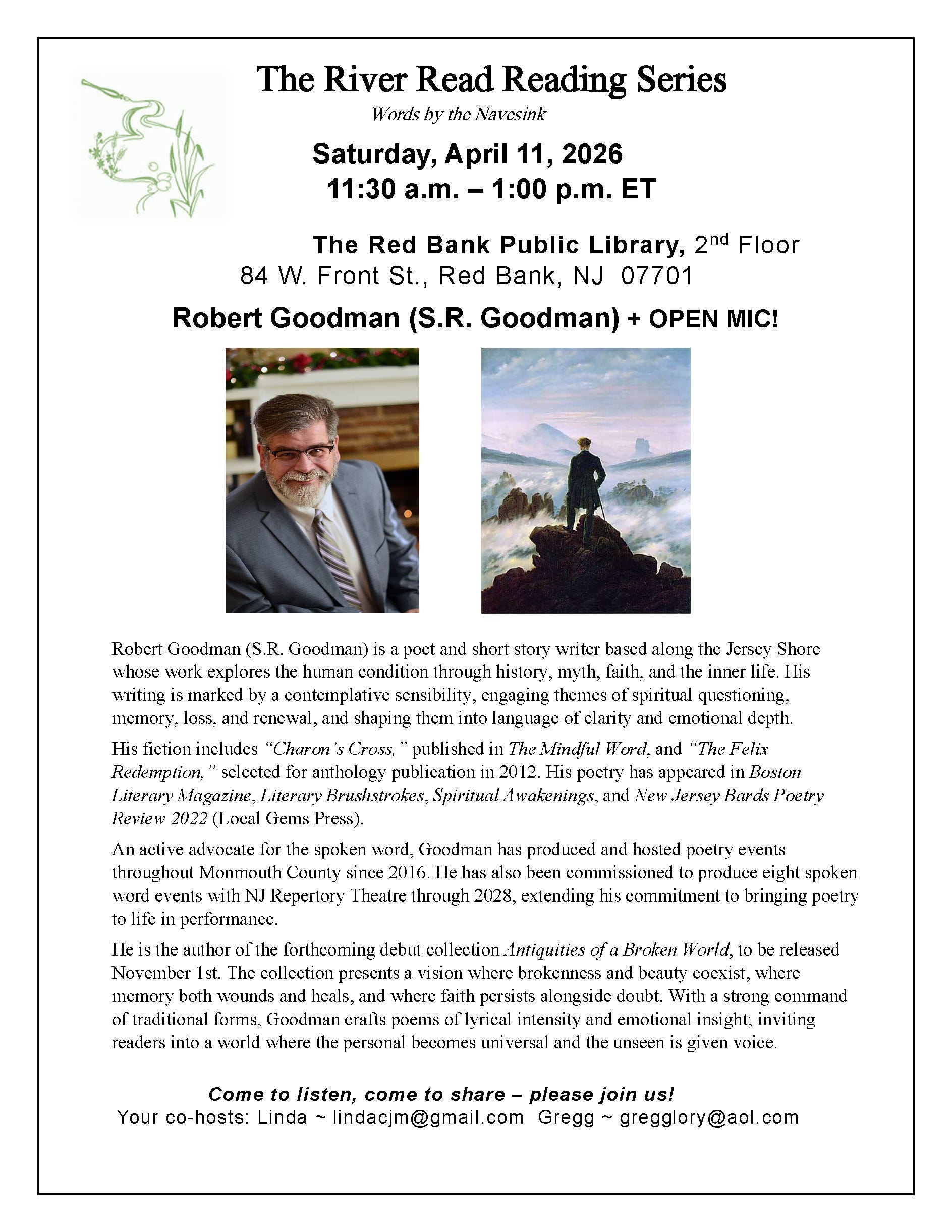
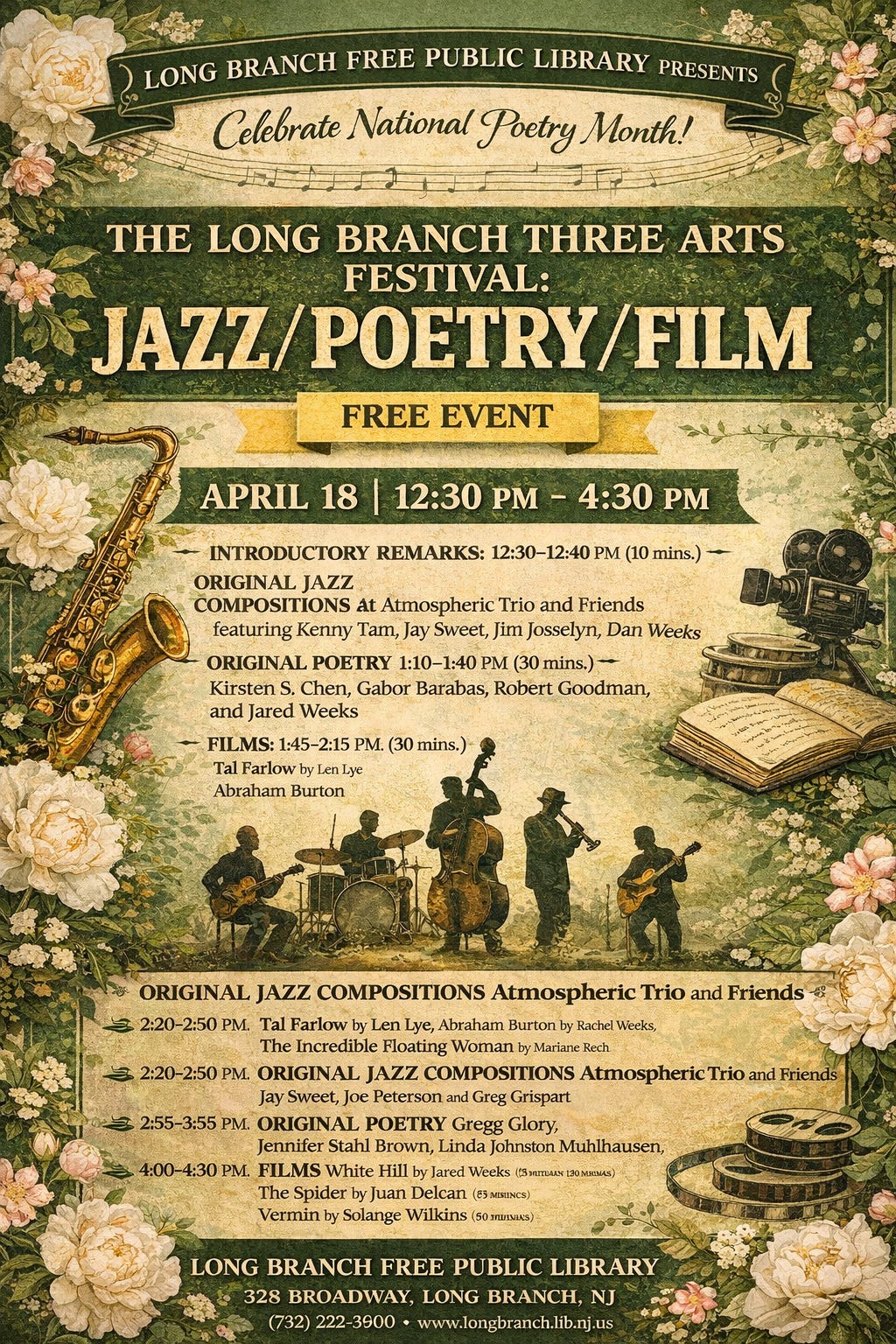
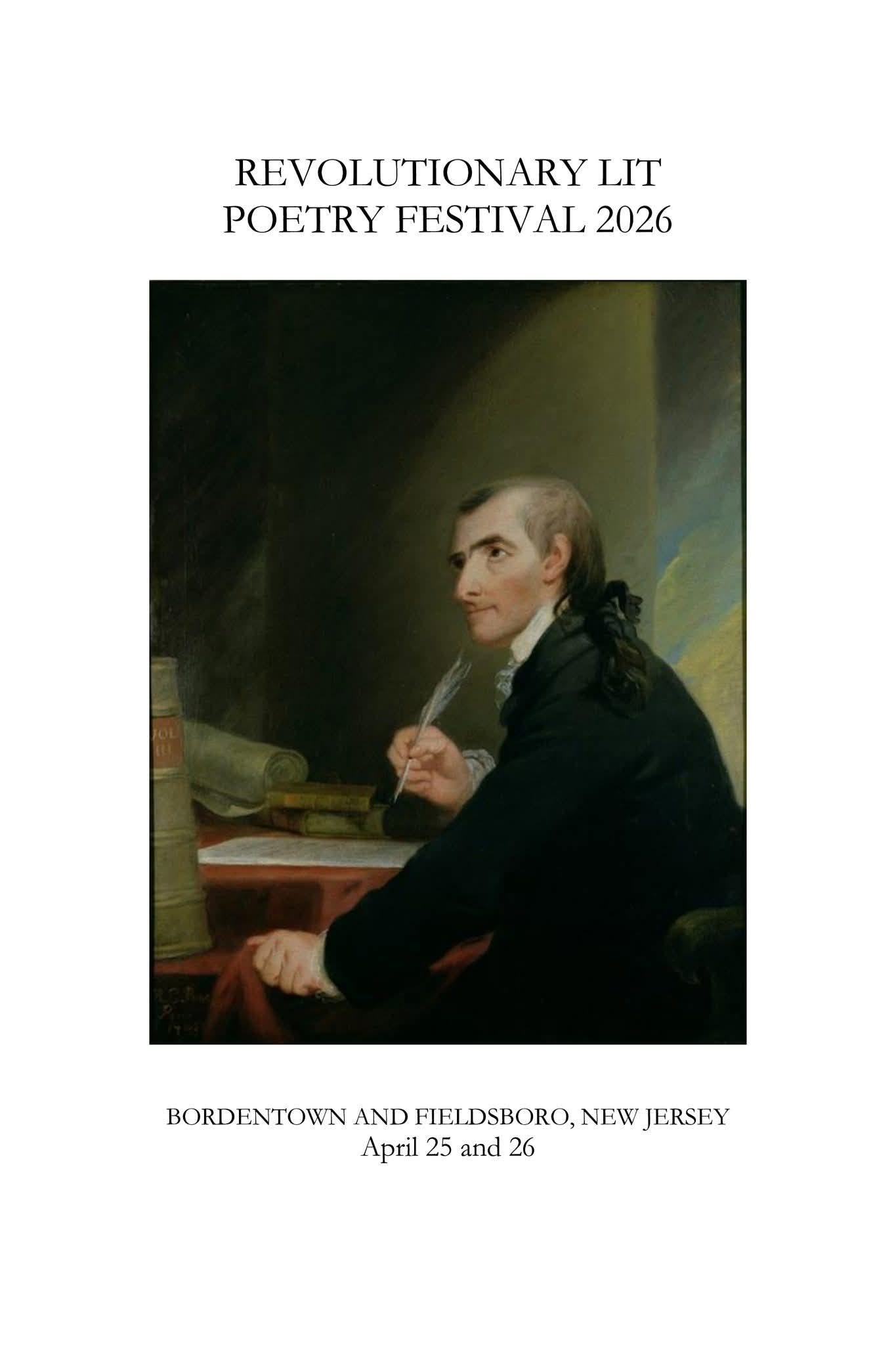
Save the dates! Poets from all over New Jersey will participate! They will be reading the works of New Jersey’s Revolutionary-era writers as well as original work of their own. Program:
April 25, 2026
Hosted by Dan Aubrey, Daniel Weeks, and Dawn Reichard
Morning Session, 10 a.m. to Noon
White Hill Mansion
10 to 11 a.m.: Tour of the Mansion with Memorial Reading in Annis Stockton’s Bedroom
11 to Noon: Readings of works of New Jersey Revolutionary Writers Annis Boudinot Stockton, Francis Hopkinson, Thomas Paine, Philip Freneau, Philip Fithian, and Jonathan Odell as well as new original poetry by Marie Wise, Joy Kreves, Robert Goodman, Ronna Lebo, and Jared Weeks.
Lunch Break, Noon to 1:30 p.m.
Afternoon Session, 2 p.m. to 4 p.m.
Old City Hall
2 to 4 p.m.: Concert of music composed by Francis Hopkinson performed by the Practitioners of Music
4 to 5 p.m. Readings of works of New Jersey Revolutionary Writers Annis Boudinot Stockton, Francis Hopkinson, Thomas Paine, Philip Freneau, Philip Fithian, and Jonathan Odell as well as new original works by Luray Gross, D. Ryan Lafferty, Champ Atlee, Carrie Pedersen Hudak, and John J. Trause
2 to 5 p.m.: Book Sale
Evening Session, 5 p.m. to 7 p.m.
Bordentown Square Pub
5 to 6 p.m.: Reading of Work by Invited Poets
6 to 7 p.m.: Open Reading
After Party, The Hob
April 26, 2026
Old City Hall
2 to 2:30 p.m.: Reading of works of New Jersey Revolutionary Writers Annis Boudinot Stockton, Francis Hopkinson, Thomas Paine, Philip Freneau, Philip Fithian, and Jonathan Odell as well as and new original works by Gregg Glory, D. Ryan Lafferty,
2:30 to 3 p.m.: Film “Philip Freneau” by Jared Weeks
3 to 3:30 p.m.: Readings of New Jersey Revolutionary Writers Philip Freneau, Philip Fithian, and Jonathan Odell as well as new original works by Jennifer Stahl Brown
3:30 to 4:30: Readings from the verse play The Alarmist by Gregg Glory.
4:30 to 5:30: About town poetry stroll with memorial readings at Thomas Paine’s statue and in front of the Francis Hopkinson House and at the café at Thomas Paine’s House
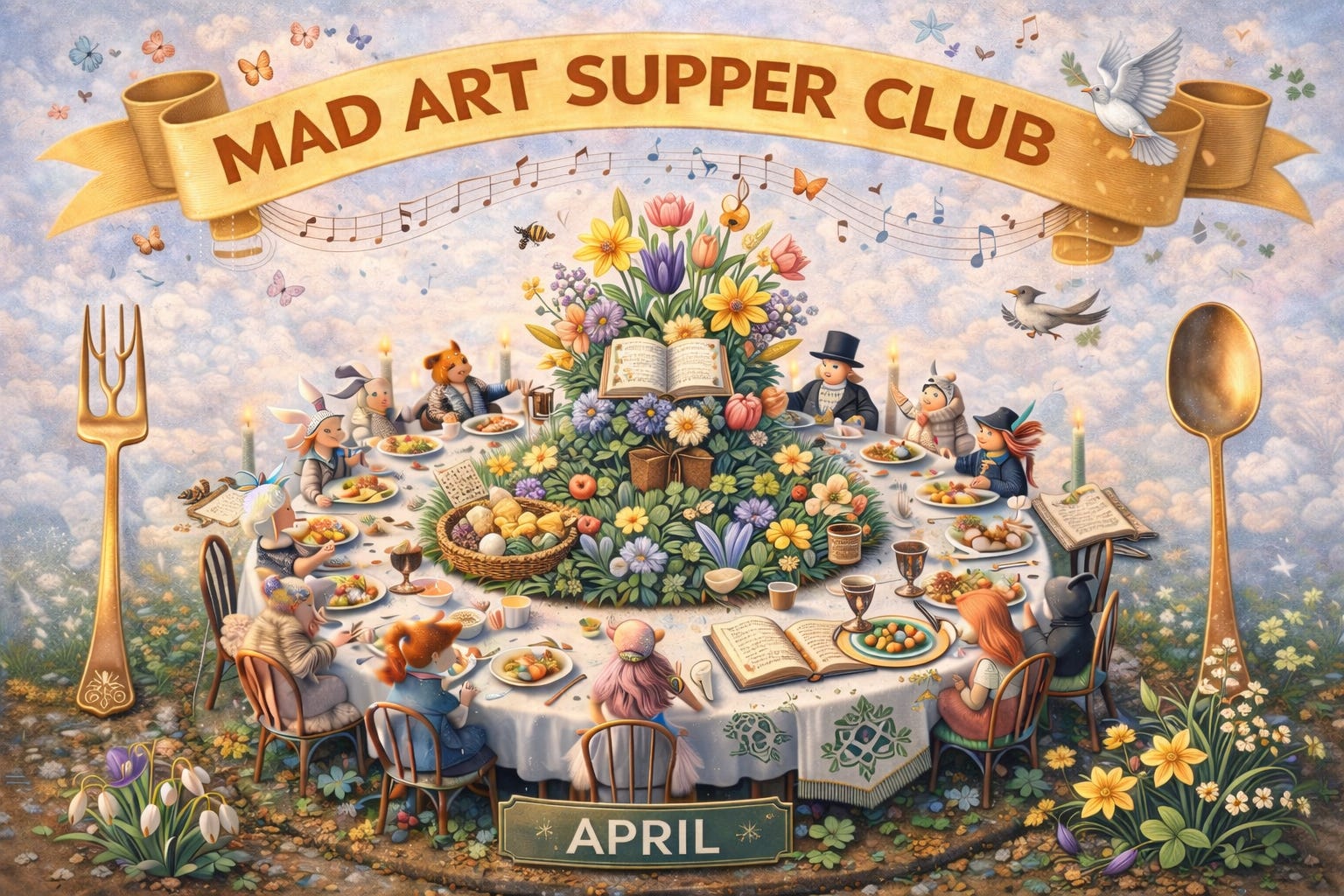
The Mad Art Supper Club returns on April 26, 2026 from 4:00 pm - 6:30 pm!
* - At Rockafellers (see ad below) and includes family style Italian meal followed by Open Mic - BYOB allowed!