
Amy Lowell
Beauty begins with attentive seeing.

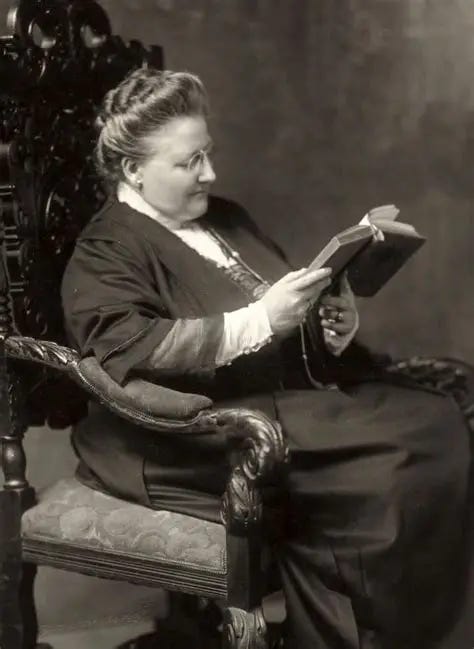
Amy Lowell (February 9, 1874 – May 12, 1925)
Beauty begins with attentive seeing.
Amy Lowell has long occupied an unusual place in American letters. She is frequently remembered as the wealthy Boston patron who championed Imagism after Ezra Pound abandoned the movement, or as the formidable literary personality whose cigar-smoking confidence unsettled the conventions of her age. Yet these colorful anecdotes have too often obscured what matters most: Amy Lowell was one of America’s finest lyric poets, possessing an extraordinary gift for transforming ordinary moments into luminous acts of perception.
If Walt Whitman expanded American poetry across the continent, Lowell invited it to pause before a single flower.
Her poems reward readers who believe that attention itself is an art.
Born into one of Boston’s most distinguished families, Lowell’s path to literature was unconventional. She received no formal university education, devouring books independently with the voracious curiosity that would define her life. When she discovered the revolutionary possibilities of free verse in her thirties, she embraced them with remarkable energy, helping establish Imagism as one of the twentieth century’s defining poetic movements.
Yet the label “Imagist” only tells part of the story.
Lowell understood that an image is never merely descriptive. It is revelatory. The poet’s task is not simply to record appearances but to discover the hidden emotional life residing within them. A garden, a window, a city street after rain, or the fragrance of blooming lilacs become occasions for memory, longing, and quiet revelation.
Her poems rarely shout.
They illuminate.
Unlike many modernists, Lowell never abandoned beauty. Even while experimenting with innovative forms and rhythms, she retained a profound affection for musical language and carefully observed detail. She believed that clarity need not diminish mystery; indeed, the clearer one sees the world, the more mysterious it becomes.
This quality gives her poetry an almost painterly character. One senses not merely description but composition. Color, texture, movement, fragrance, and light combine upon the page with the delicacy of watercolor, inviting readers to inhabit a moment rather than merely witness it.
There is another aspect of Lowell’s legacy that deserves renewed appreciation. At a time when women poets were often expected to write within narrowly prescribed emotional boundaries, she claimed complete artistic independence. She wrote of love, grief, memory, and desire with unapologetic authority while also becoming one of the foremost advocates for contemporary poetry in America. Her lectures, criticism, and tireless promotion of fellow writers helped shape the literary landscape far beyond her own work.
Today, nearly a century after her death, Amy Lowell’s poetry feels quietly contemporary. In an age defined by distraction, she reminds us that careful observation remains a radical act. Her poems ask us to linger over what others overlook: the changing light upon leaves, the perfume carried on evening air, the subtle ways memory inhabits the natural world.
Perhaps that is why her voice continues to resonate. Lowell understood that beauty is seldom spectacular. More often it arrives quietly, waiting for someone willing to stop long enough to notice.
She teaches us that poetry begins where attention becomes affection.
In “Lilacs”, Amy Lowell transforms a familiar spring blossom into an emblem of memory, beauty, and the quiet persistence of the natural world. What begins as a meditation upon fragrance gradually unfolds into a celebration of those moments when the ordinary reveals unexpected grace.
"Lilacs,
False blue,
White,
Purple,
Color of lilac,
Your great puffs of flowers
Are everywhere in this my New England.
Among your heart-shaped leaves
Orange orioles hop like music-box birds and sing
Their little weak soft songs;
In the crooks of your branches
The bright eyes of song sparrows sitting on spotted eggs
Peer restlessly through the light and shadow
Of all Springs.
Lilacs in dooryards
Holding quiet conversations with an early moon;
Lilacs watching a deserted house
Settling sideways into the grass of an old road;
Lilacs, wind-beaten, staggering under a lopsided shock of bloom
Above a cellar dug into a hill.
You are everywhere.
You were everywhere.
You tapped the window when the preacher preached his sermon,
And ran along the road beside the boy going to school.
You stood by the pasture-bars to give the cows good milking,
You persuaded the housewife that her dishpan was of silver.
And her husband an image of pure gold.
You flaunted the fragrance of your blossoms
Through the wide doors of Custom Houses—
You, and sandal-wood, and tea,
Charging the noses of quill-driving clerks
When a ship was in from China.
You called to them: “Goose-quill men, goose-quill men,
May is a month for flitting.”
Until they writhed on their high stools
And wrote poetry on their letter-sheets behind the propped-up ledgers.
Paradoxical New England clerks,
Writing inventories in ledgers, reading the “Song of Solomon” at night,
So many verses before bed-time,
Because it was the Bible.
The dead fed you
Amid the slant stones of graveyards.
Pale ghosts who planted you
Came in the nighttime
And let their thin hair blow through your clustered stems.
You are of the green sea,
And of the stone hills which reach a long distance.
You are of elm-shaded streets with little shops where they sell kites and marbles,
You are of great parks where every one walks and nobody is at home.
You cover the blind sides of greenhouses
And lean over the top to say a hurry-word through the glass
To your friends, the grapes, inside.


Lilacs,
False blue,
White,
Purple,
Color of lilac,
You have forgotten your Eastern origin,
The veiled women with eyes like panthers,
The swollen, aggressive turbans of jeweled pashas.
Now you are a very decent flower,
A reticent flower,
A curiously clear-cut, candid flower,
Standing beside clean doorways,
Friendly to a house-cat and a pair of spectacles,
Making poetry out of a bit of moonlight
And a hundred or two sharp blossoms.
Maine knows you,
Has for years and years;
New Hampshire knows you,
And Massachusetts
And Vermont.
Cape Cod starts you along the beaches to Rhode Island;
Connecticut takes you from a river to the sea.
You are brighter than apples,
Sweeter than tulips,
You are the great flood of our souls
Bursting above the leaf-shapes of our hearts,
You are the smell of all Summers,
The love of wives and children,
The recollection of gardens of little children,
You are State Houses and Charters
And the familiar treading of the foot to and fro on a road it knows.
May is lilac here in New England,
May is a thrush singing “Sun up!” on a tip-top ash tree,
May is white clouds behind pine-trees
Puffed out and marching upon a blue sky.
May is a green as no other,
May is much sun through small leaves,
May is soft earth,
And apple-blossoms,
And windows open to a South Wind.
May is full light wind of lilac
From Canada to Narragansett Bay.


Lilacs,
False blue,
White,
Purple,
Color of lilac.
Heart-leaves of lilac all over New England,
Roots of lilac under all the soil of New England,
Lilac in me because I am New England,
Because my roots are in it,
Because my leaves are of it,
Because my flowers are for it,
Because it is my country
And I speak to it of itself
And sing of it with my own voice
Since certainly it is mine."

- Amy Lowell, 'Lilacs'
“Lilacs” exemplifies Amy Lowell’s remarkable ability to unite sensory richness with emotional restraint. Rather than using nature as ornament, she allows the flower itself to become the poem’s language, carrying memory and feeling upon its fragrance. The poem reminds us that beauty rarely announces itself; it waits patiently for those willing to notice. In Lowell’s hands, a cluster of blossoms becomes an invitation to dwell more attentively within the world we so often hurry past.


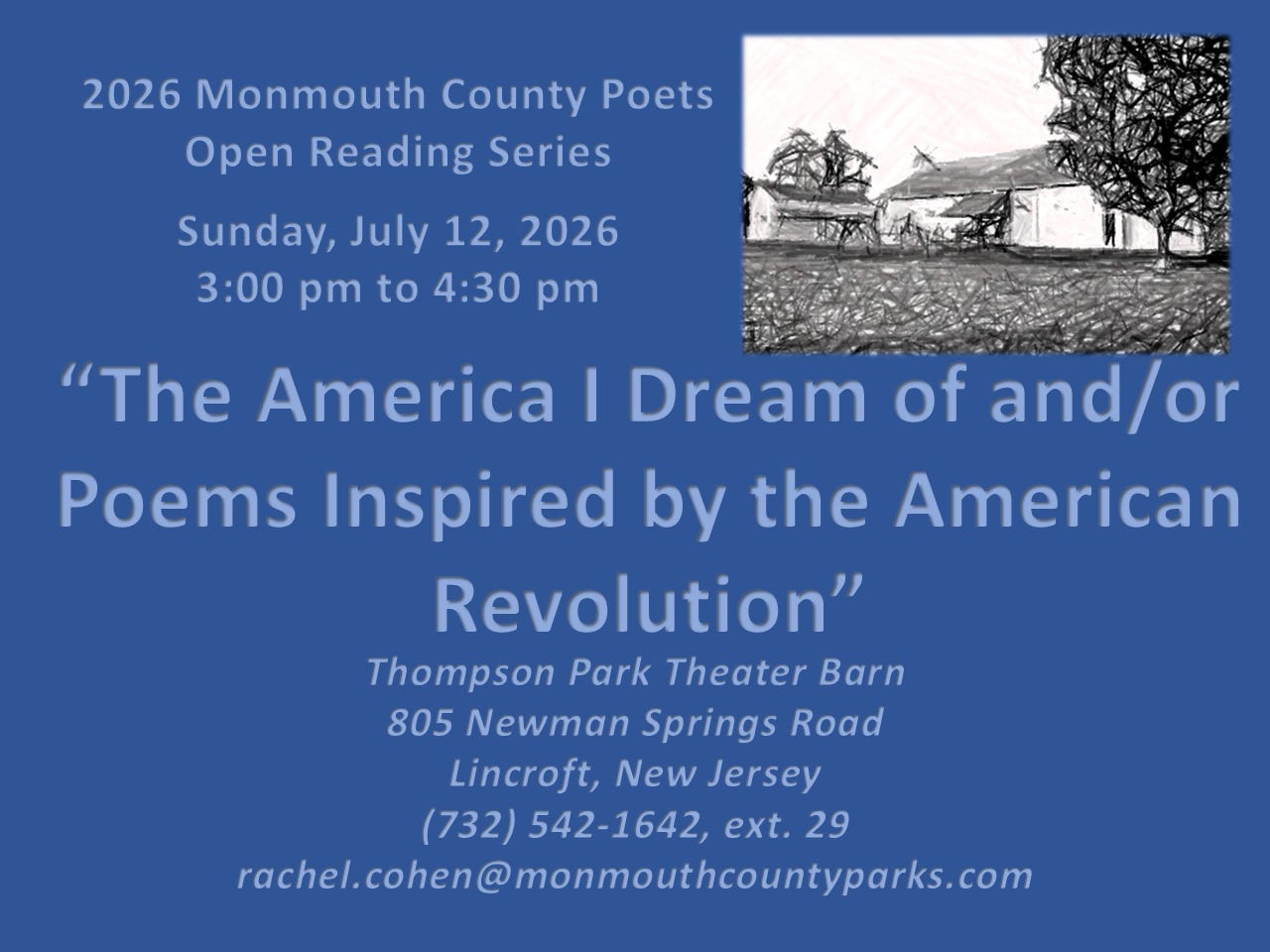

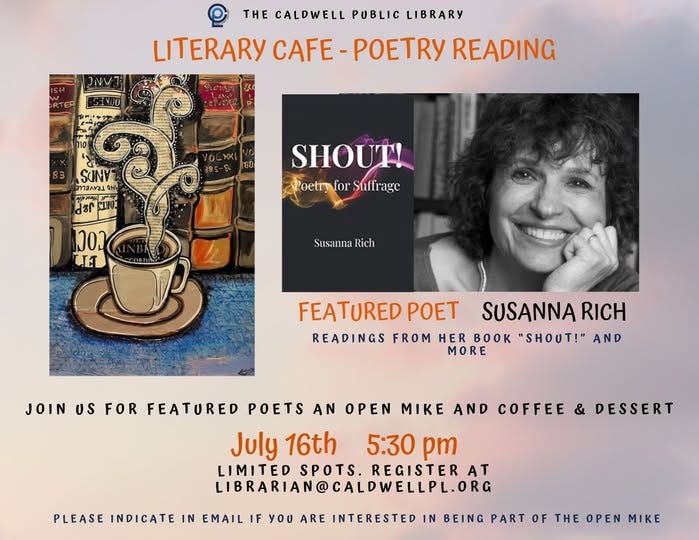
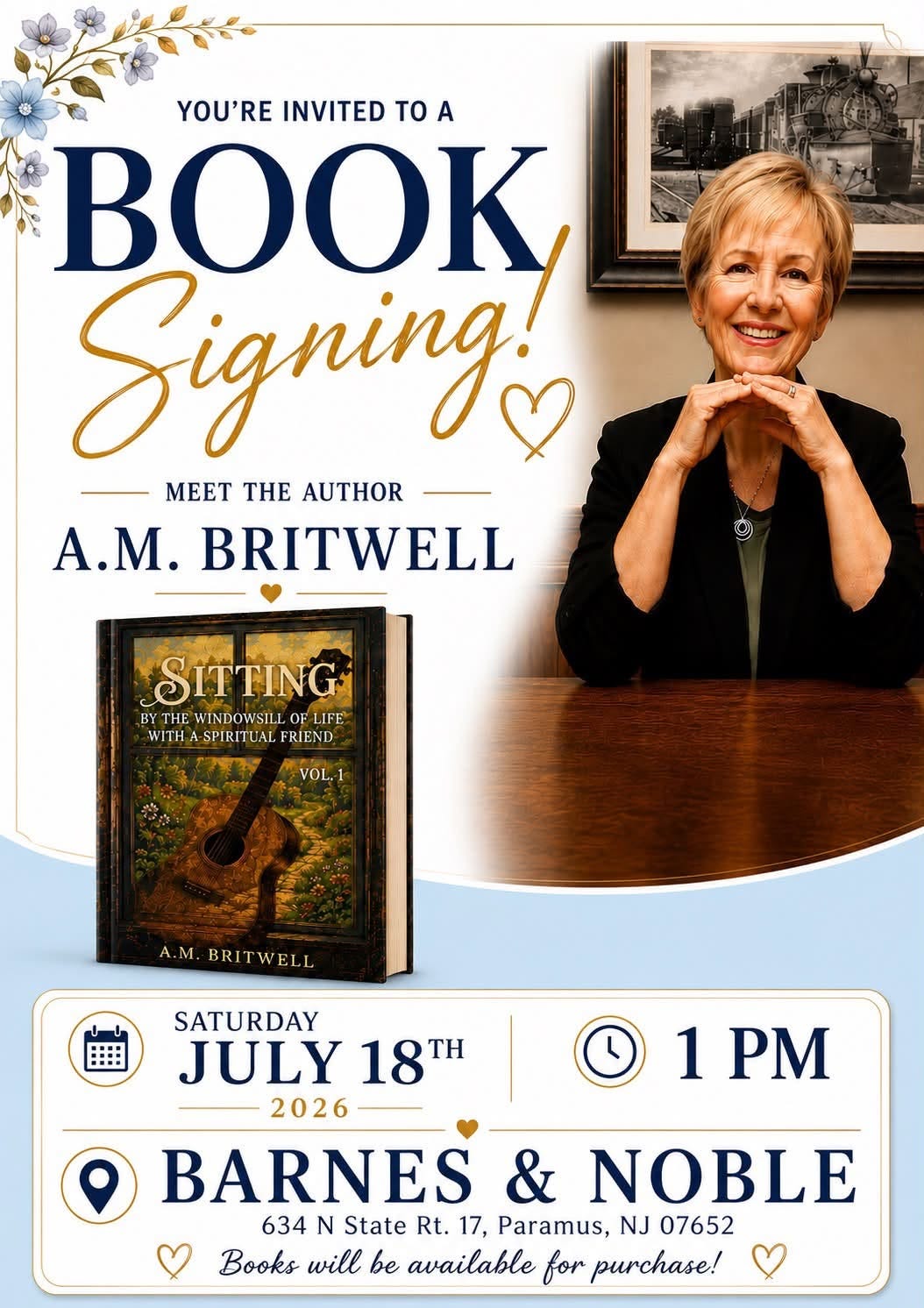

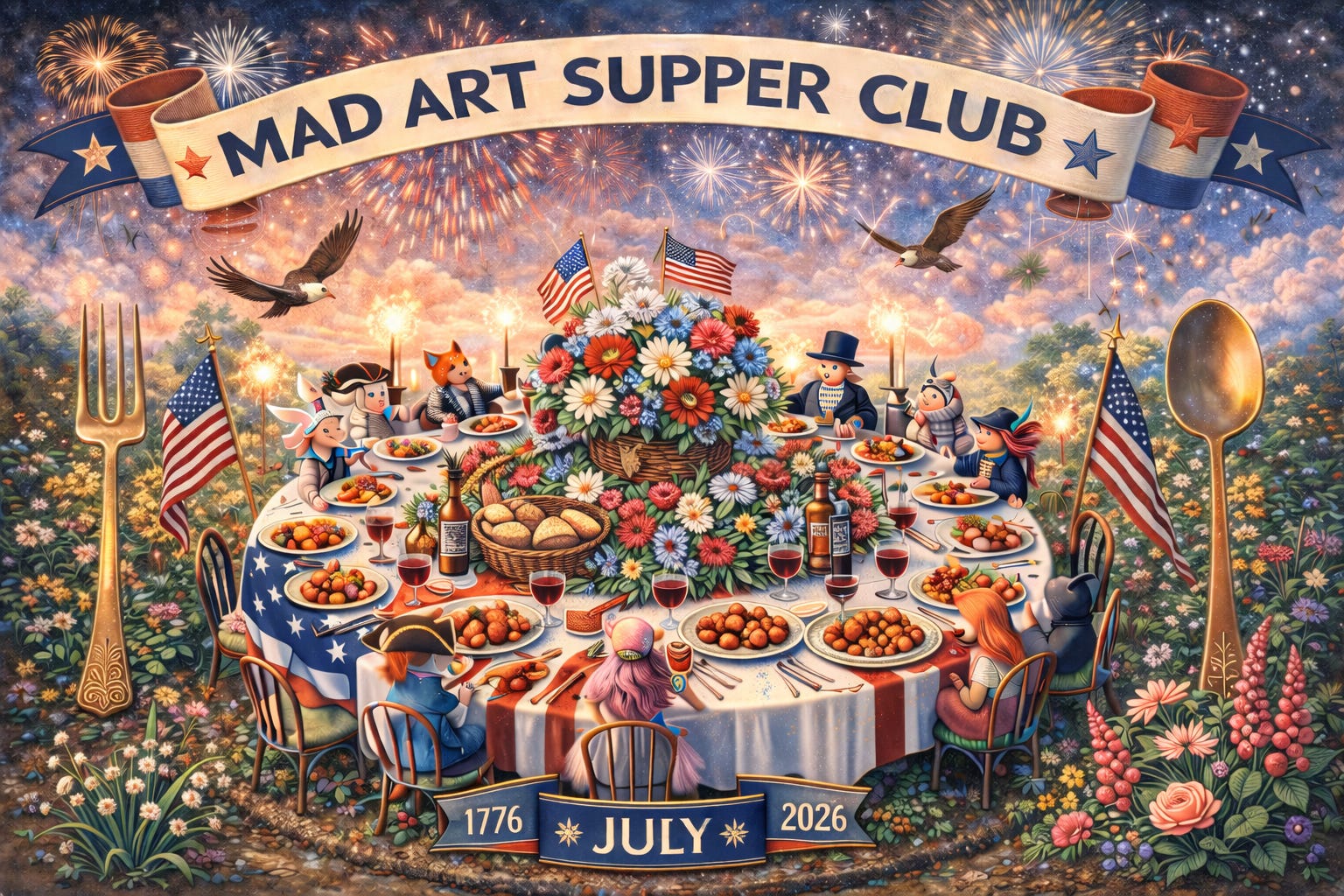
July 26, 2026 from 4:00 pm to 6:30 pm - Monmouth County’s only poetry open microphone event solely devoted to new poets and original poetic readings! Come hear a future classic! Plus a great family style Italian meal for only $10 (salad, bread, pasta and rumour of meatballs!). Bring your favourite wine!
Come to eat! Come to read! Come to listen! All leave as friends!
Rockafellers at 421 Prospect Street in Long Branch

Loved the Amy Lowell essay, insightful and thoughtfully rendered!